How to Build a Self-Managing Team Without Micromanaging Everything
One of the most common frustrations founders experience is this.
They feel like they have to stay involved in everything for the business to run smoothly.
Approvals.
Decisions.
Clarifications.
Problem solving.
Without them, things slow down.
This creates an exhausting cycle where leadership becomes the central hub of the company.
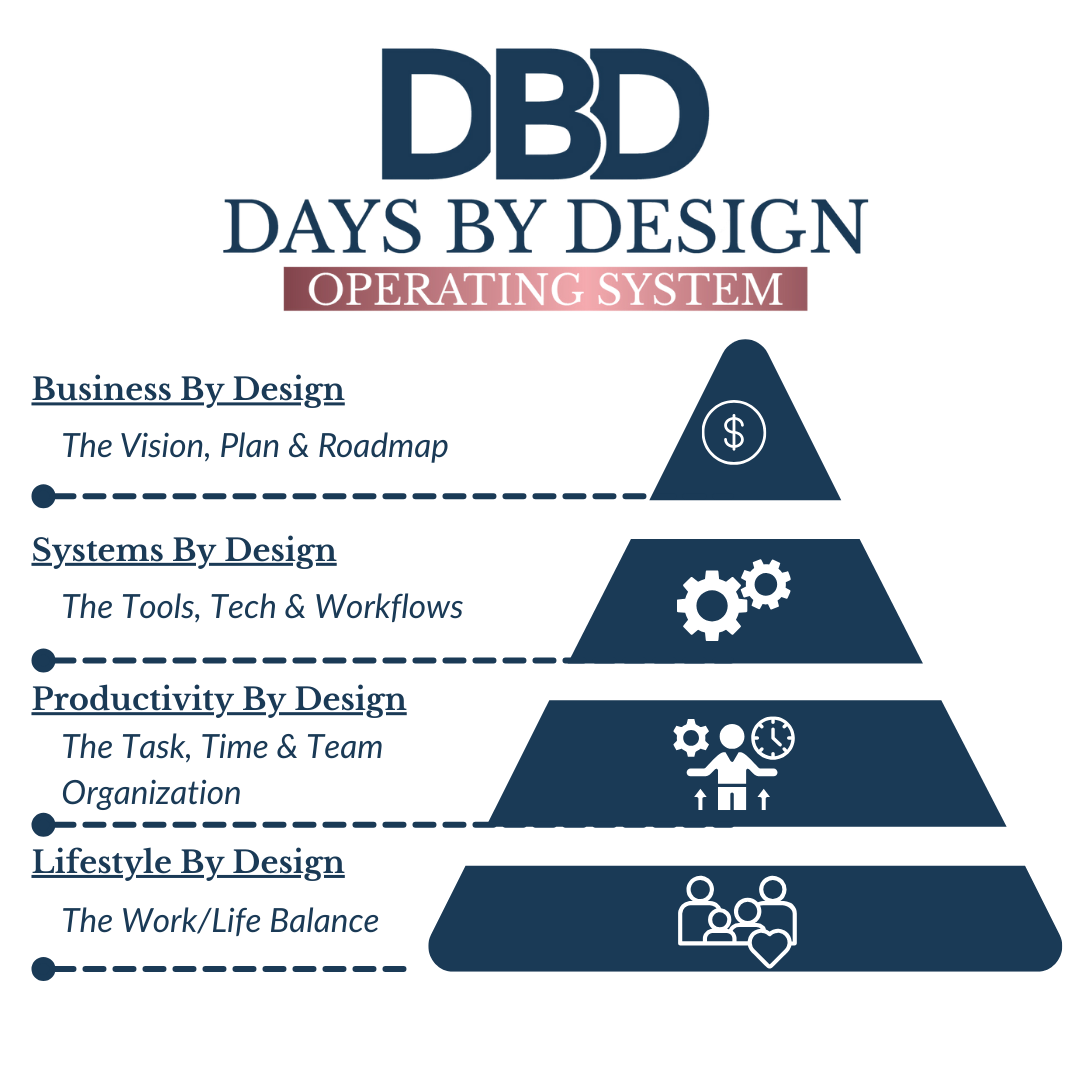
Inside the Days By Design Operating System™, one of the core goals is building a self-managing team.
Here is the framework that makes it possible.
Step 1: Make Work Visible
The first requirement for autonomy is visibility.
If work is scattered across Slack messages, emails, and random conversations, teams cannot operate independently.
Projects and tasks must live in one clear location.
Everyone should be able to see what is happening, what is due, and who owns each piece of work.
Visibility reduces confusion immediately.
Step 2: Clarify Ownership
Many companies accidentally create shared ownership.
Everyone is involved, but no one is fully responsible.
This leads to delays and constant follow-up.
Instead every project and task should have one clear owner.
That owner is responsible for moving the work forward and coordinating with others when needed.
Clear ownership dramatically reduces leadership intervention.
Step 3: Define Decision Boundaries
Founders often stay involved in everything because decision authority has never been clearly defined.
Teams are unsure what they are allowed to decide.
So they escalate questions upward.
Instead leaders should define decision boundaries.
What can the team decide independently?
What requires leadership input?
What decisions require collaboration?
When these boundaries exist, decision making becomes much faster.
Step 4: Create Process Documentation
Teams struggle when knowledge lives only in someone’s head.
Processes should be documented in simple, accessible ways.
This does not require complicated manuals.
Even short checklists or workflow outlines can eliminate repeated questions.
Over time these documents become a powerful knowledge base for the organization.
Step 5: Install a Weekly Operating Rhythm
Finally, teams need a predictable rhythm.
Weekly planning meetings.
Clear project updates.
Defined review cycles.
This structure keeps work moving without constant leadership involvement.
When these elements are implemented together, something remarkable happens.
The team begins solving problems independently.
Leaders spend less time reacting.
And the organization develops the capacity to scale.
Self-managing teams are not built by hiring perfect employees.
They are built by installing the right operating system.
Book a call or send me a DM to learn more.