The Founder’s Guide to Building a Meeting System That Creates Alignment Without Calendar Overload
Meetings have become one of the most misunderstood parts of running a growing company.
Some leaders believe meetings are the enemy.
Others believe more meetings create better alignment.
Both are wrong.
The problem is not meetings.
The problem is using meetings as a replacement for operational systems.
When companies scale, communication naturally becomes more complex.
More people.
More departments.
More projects.
More decisions.
The solution is not avoiding communication.
The solution is designing communication intentionally.
A strong meeting system allows a company to stay aligned without requiring everyone to be involved in everything.
The Founder Meeting Trap
Many founders accidentally create meeting dependency.
It usually starts innocently.
Someone asks a question.
The founder answers.
A second person needs clarification.
Another conversation happens.
Soon, the founder becomes the central communication hub.
Every important decision passes through them.
Every project update comes to them.
Every issue requires their input.
The founder becomes the meeting infrastructure.
This is exhausting.
And it prevents leadership from focusing on growth.
Step One: Define the Purpose of Every Meeting
Every recurring meeting should have a clear purpose.
If the purpose cannot be explained in one sentence, the meeting probably should not exist.
Examples:
Leadership Meeting:
Align priorities and make strategic decisions.
Team Meeting:
Share important information and reinforce alignment.
Project Meeting:
Remove obstacles and move initiatives forward.
One-on-One:
Develop people and address individual needs.
Different purposes require different structures.
Step Two: Separate Information Sharing From Decision Making
One of the biggest meeting mistakes:
Using valuable meeting time to share information people could read.
Ask:
Does this require discussion?
Does this require a decision?
Does this require collaboration?
If the answer is no, it may not belong in a meeting.
Updates can often happen through:
Dashboards.
Project systems.
Documentation.
Written communication.
Meetings should be reserved for things that benefit from human interaction.
Step Three: Create Meeting Rhythms
A strong company has predictable communication rhythms.
Examples:
Daily:
Quick team coordination when needed.
Weekly:
Priority alignment and execution review.
Monthly:
Performance and improvement conversations.
Quarterly:
Strategic planning and business direction.
The goal is creating enough communication without creating constant interruption.
Step Four: Build Better Agendas
A meeting agenda should not simply be a list of topics.
It should guide outcomes.
A strong agenda includes:
Purpose.
Key discussion points.
Required decisions.
Responsible owners.
Next actions.
The meeting should answer:
What changed?
What decisions need to happen?
What happens next?
Step Five: Create Follow-Up Systems
The biggest meeting failure happens after the meeting.
Someone says:
“We will circle back.”
Then nobody knows:
Who owns it?
When is it due?
What exactly needs to happen?
Every meeting should create clear action items.
A decision without ownership is just a conversation.
How Days By Design Operating System™ Creates Meeting Clarity
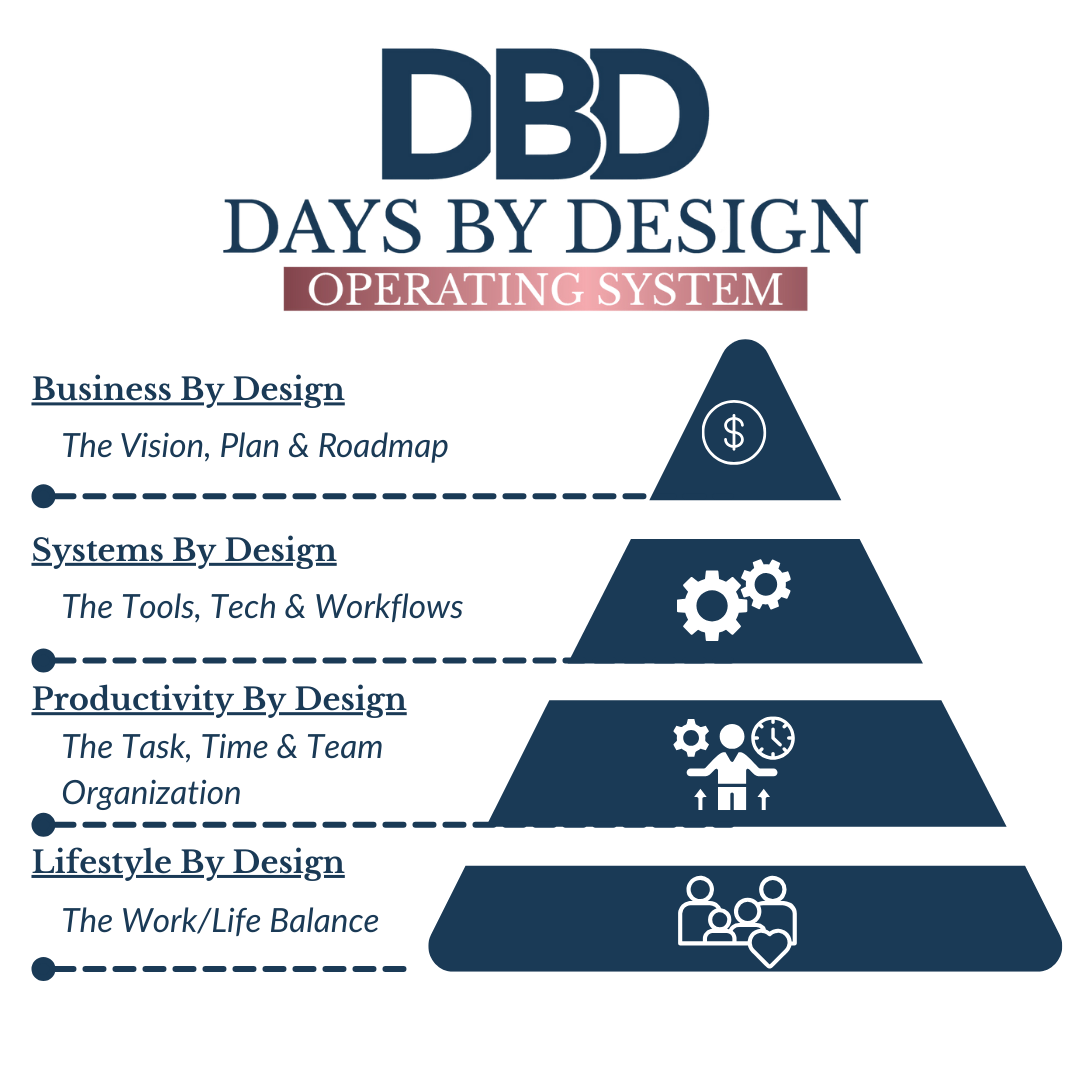
The Days By Design Operating System™ helps founders redesign their communication infrastructure.
We evaluate:
Current meetings.
Communication gaps.
Decision-making processes.
Follow-up systems.
Leadership rhythms.
The goal is not fewer conversations.
The goal is creating conversations that matter.
A scalable company does not eliminate communication.
It eliminates unnecessary friction.
The Founder’s Role Has To Change
At the beginning, founders create momentum through personal involvement.
As the company grows, founders create momentum through intentional systems.
That means moving from:
“I need to be included in everything.”
To:
“I need to create a structure where the right things reach me.”
The best meeting system does not remove the founder.
It protects the founder’s attention.
Because attention is one of the most valuable resources in the company.
Your calendar is not just a schedule.
It is a reflection of your operating model.
Design it accordingly.
Book a call or send me a DM to learn more.