The Founder’s Guide to Building a Sales System That Creates Predictable Growth
Most founders do not intentionally build a sales system.
- They build a sales habit.
- They learn what works.
- They refine their message.
- They develop relationships.
- They close deals.
And for a while, that is enough.
Then the company grows. More opportunities appear. More people join the team. More revenue is expected.
Suddenly, the founder realizes: “We have sales activity, but we do not have sales consistency.”
That is the difference between selling and building a sales system.
A sales system creates repeatability.
It allows the company to understand: Where opportunities come from, How prospects move through the process, What actions create momentum, Who owns each step, & How revenue is forecasted.
Without a system, growth becomes unpredictable.
The Problem With Founder-Dependent Sales
Founders are often incredible salespeople.
They understand the problem deeply. They communicate passion. They build trust quickly.
But founder-led sales has a hidden limitation.
It does not automatically transfer.
A founder may know:
- Exactly what questions to ask.
- When a prospect is ready.
- How to handle objections.
- How to position the offer.
- How to create urgency.
But if that knowledge only exists in the founder’s experience, the company cannot scale it.
The first step is capturing what works.
Step One: Define Your Sales Journey
Every company needs a clear path from prospect to customer. This includes:
- Lead generation.
- Qualification.
- Discovery.
- Proposal.
- Decision.
- Contract.
- Onboarding.
Each stage should have a purpose. Without defined stages, opportunities become unclear.
A prospect might appear active but have no real buying intent.
A proposal might sit without follow-up.
A salesperson might not know the next action.
A process creates movement.
Step Two: Build Clear Qualification Criteria
Not every opportunity deserves equal attention. Growing companies often waste time because they have not defined who they serve best.
A strong sales system identifies:
- Ideal clients.
- Common challenges.
- Budget expectations.
- Decision-making process.
- Timeline.
- Fit indicators.
- Qualification protects your team’s time.
Step Three: Create Follow-Up Systems
Most sales opportunities are lost because follow-up is inconsistent.Not because the customer was not interested.
A system defines:
- When follow-up happens.
- Who follows up.
- What information is shared.
- How opportunities are tracked.
- Consistency beats memory.
Step Four: Connect Technology to Process
Many companies have expensive sales tools. But the process inside them is unclear.
A CRM should answer:
- What opportunities exist?
- What stage are they in?
- What happens next?
- Who owns them?
- A tool without a process creates more data.
- A process with the right tool creates visibility.
Step Five: Document the Sales Process
Your sales process should become part of your company’s operating system.
Document:
- Scripts.
- Discovery questions.
- Proposal templates.
- Pricing guidelines.
- Follow-up expectations.
- CRM standards.
- Handoff procedures.
The goal is not creating a rigid script. The goal is creating consistency.
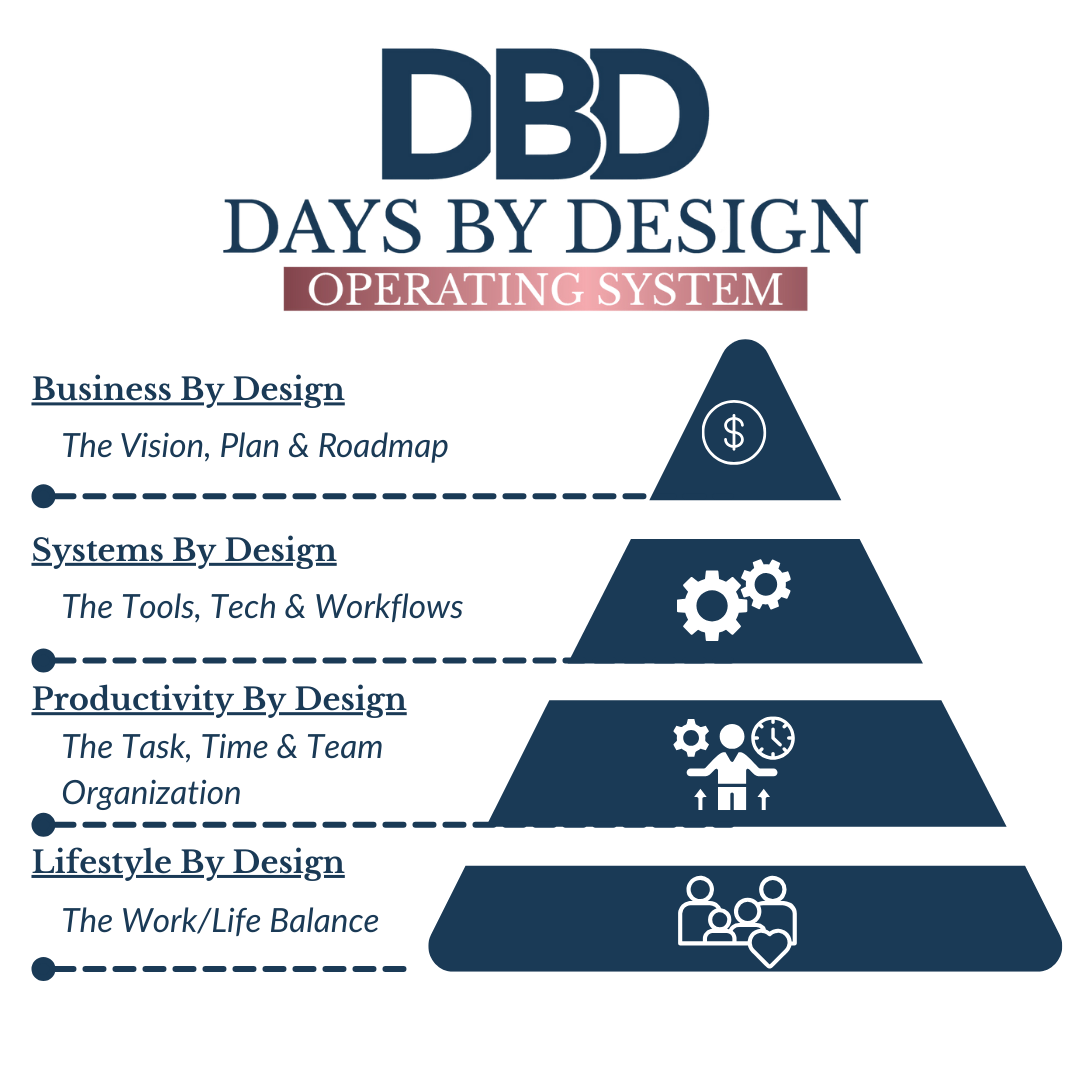
How Days By Design Operating System™ Builds Sales Infrastructure
The Days By Design Operating System™ helps founders connect sales strategy with operational systems execution.
We evaluate:
- Lead management.
- CRM structure.
- Scheduling systems.
- Proposal workflows.
- Contract processes.
- Sales handoffs.
- Revenue visibility.
The goal is creating a sales process that supports growth without requiring the founder to personally carry every opportunity.
The Founder Shift
The biggest sales transformation happens when founders move from:
“I close every deal.” to “We have a system that consistently creates opportunities.”
That shift creates capacity.
It allows founders to focus on:
- Strategy.
- Relationships.
- Leadership.
- Growth.
Your company should benefit from everything you have learned. A sales system is how you transfer that knowledge into the future. Book a call or send me a DM to learn more.
Book a call or send me a DM to learn more.