The Founder’s Task Management Playbook: Stop Managing Work Through Memory
The Founder’s Task Management Playbook: Stop Managing Work Through Memory
There is a point in almost every growing company when the founder realizes something uncomfortable: despite having a team, they are still managing everyone’s work.
They’re remembering deadlines, answering questions, chasing updates, approving decisions, and noticing when something has fallen through the cracks.
The company may have project management software, but the founder is still the operating system.
The solution isn’t another task app.
It is a better task management architecture.
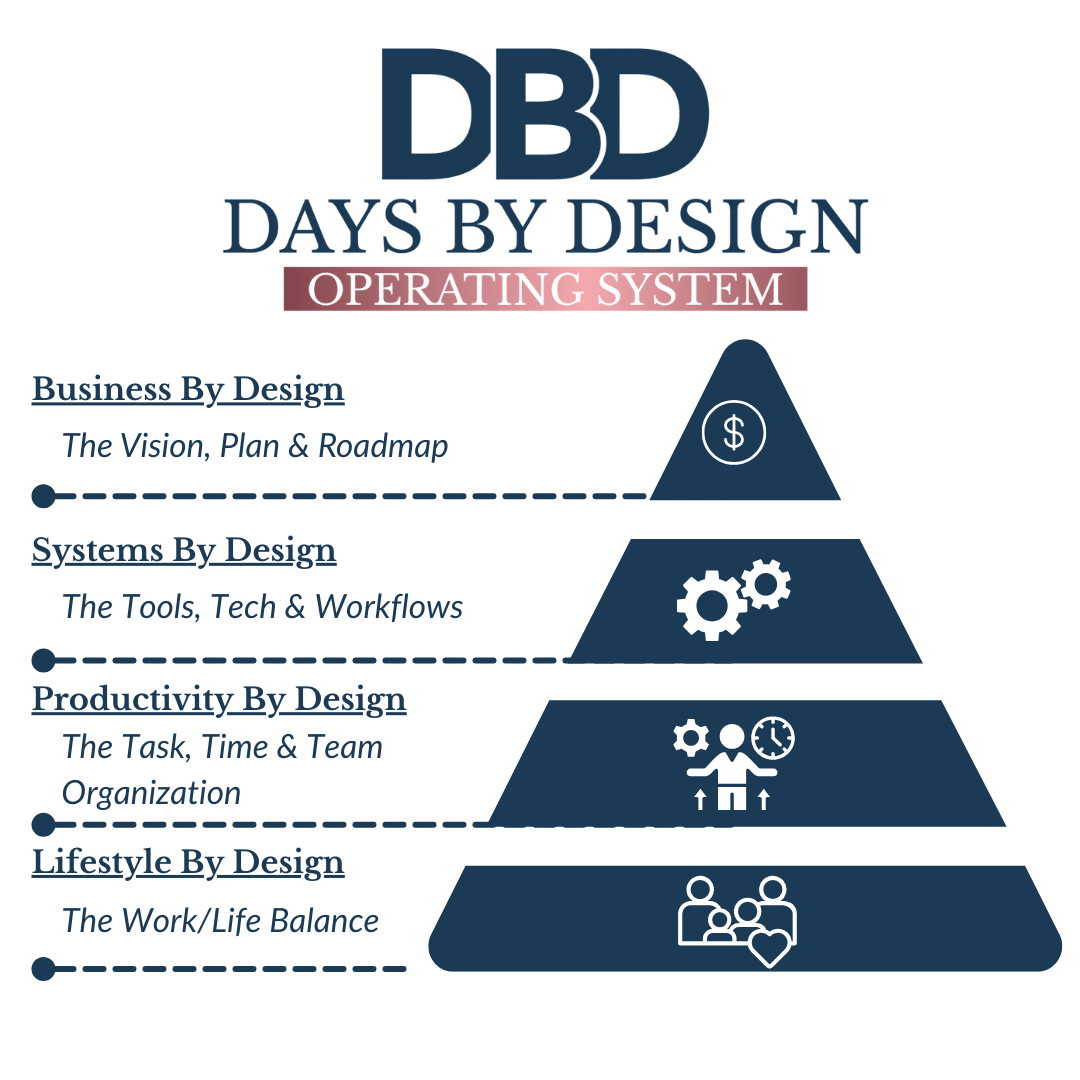
The Days By Design Operating System™ approaches task management as a system for creating ownership and organizational independence.
Start with ownership.
Every meaningful task needs one accountable person. Collaboration can involve multiple people, but accountability should never belong to “the team.”
When ownership is unclear, people make assumptions. Eventually, everyone discovers that everyone assumed someone else was handling it.
Define what completion means.
“Finish the proposal” can mean several different things. Does the person need to draft it, get approval, send it, update the CRM, or schedule a follow-up?
The more ambiguity a task contains, the more likely someone will interpret it differently than the person who assigned it.
Define the outcome instead of relying on shorthand.
Create rules for priority.
Priority should not be determined by who sends the most messages or who has the strongest personality.
Create objective criteria around client commitments, revenue impact, deadlines, risk, dependencies, and strategic importance.
This gives employees a framework for deciding what matters without escalating every competing demand.
Make decision rights visible.
Some decisions should belong to employees. Others belong to managers. A small number genuinely require founder involvement.
If those boundaries aren’t defined, the founder becomes the default escalation point.
That is one of the biggest hidden drivers of leadership overload.
Make dependencies visible.
A late task isn’t always an employee performance problem. Sometimes someone is waiting for information, approval, or another task to be completed.
Without visibility into dependencies, leaders can end up pressuring the wrong person while the real bottleneck remains untouched.
Finally, build a review rhythm.
A task system should not require leadership to inspect every task every day.
Create regular team and leadership reviews that focus on exceptions, blocked work, overdue commitments, and decisions that genuinely require escalation.
That changes the role of leadership from monitoring everything to managing what needs attention.
The ultimate test is simple:
How much work can move through your company without you touching it?
If the answer is “not much,” your problem isn’t that your team needs to be more productive.
Your operating system needs to become more independent.
That’s the shift the Days By Design Operating System™ is designed to create: moving the founder from being the person who keeps work moving to the person who designs the system that allows work to move.
Book a call or send me a DM to learn more.