Why Founders Stay Busy Even After Hiring Help
Hiring should make your life easier.
Yet many founders hire employees, contractors, or virtual assistants only to find themselves just as overwhelmed a few months later.
The calendar is still packed.
Questions keep coming.
Projects still require oversight.
And despite having more help, the founder remains involved in nearly everything.
If this sounds familiar, the problem probably isn’t your team.
It’s that your business has not yet reached operational maturity.
Many founders assume hiring creates capacity.
In reality, systems create capacity.
People simply operate within those systems.
Without clear processes, ownership, and accountability, every new hire creates additional complexity instead of reducing workload.
That’s why so many founder-led businesses grow in revenue while the founder remains stuck in daily operations.
Why Hiring Doesn’t Automatically Create Freedom
In the early stages of business, founder dependency is normal.
The founder makes decisions.
The founder solves problems.
The founder manages clients.
The founder drives execution.
But as the business grows, many founders continue operating the same way.
The only difference is that more people now depend on them.
Instead of answering client questions, they’re answering team questions.
Instead of doing all the work, they’re managing all the work.
The workload shifts, but it doesn’t shrink.
This is where growth starts feeling heavier instead of easier.
The business expands, but the founder’s capacity does not.
The Difference Between Assigning Tasks And Delegating
One of the biggest mistakes founders make is confusing task assignment with delegation.
Assigning a task means someone else does the work.
Delegation means someone else owns the outcome.
Without systems, tasks eventually come back to the founder through questions, approvals, updates, and problem solving.
The founder remains the bottleneck.
True delegation requires more than handing work to someone else.
It requires creating an environment where work can be completed successfully without constant founder involvement.
That’s where operational systems become critical.
The Four Components Of Effective Delegation
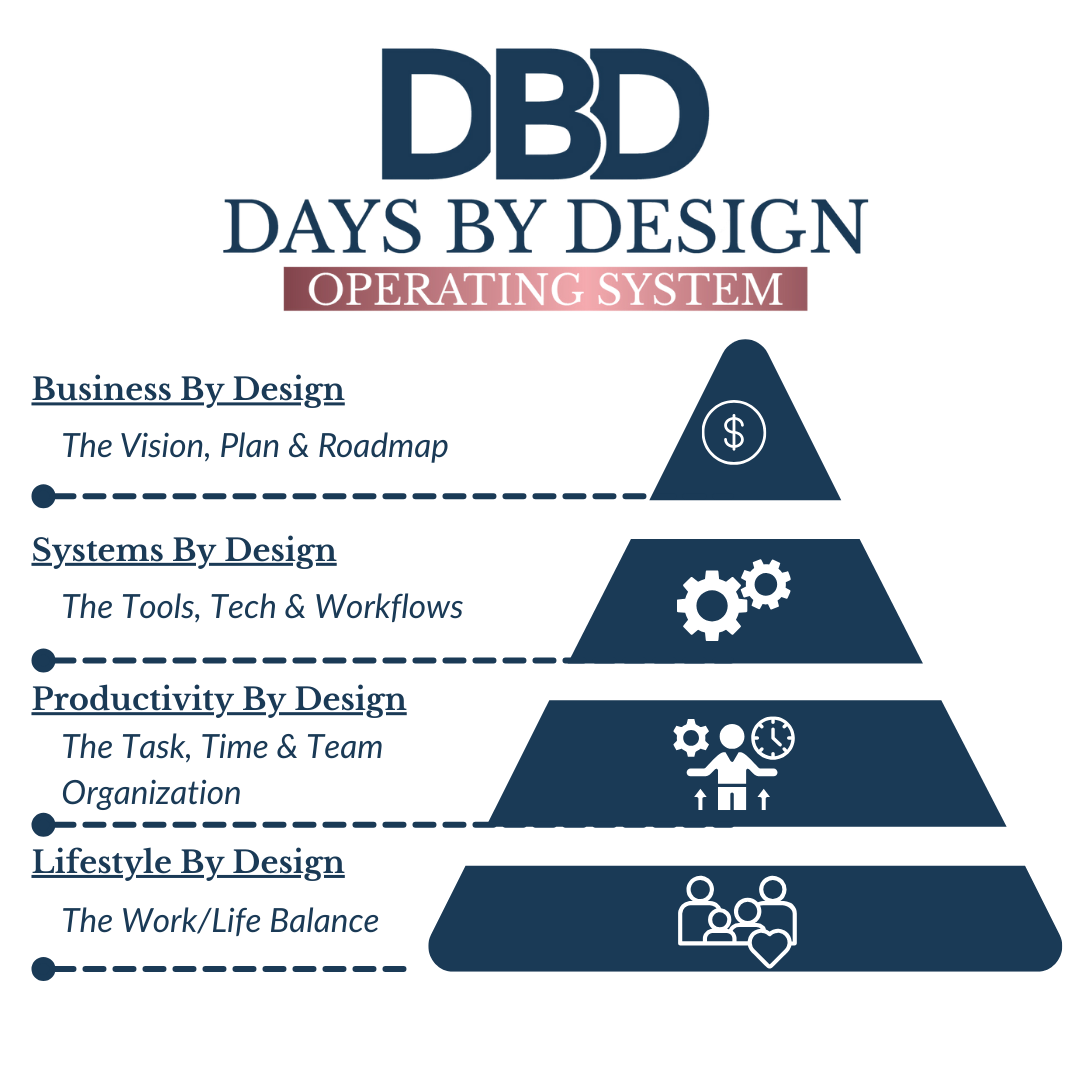
Inside the Days By Design Operating System™, we focus on four key elements that help founders create capacity.
1. Clear Processes
If a process only exists in your head, your team cannot execute it consistently.
Document recurring workflows so team members know exactly what success looks like.
2. Clear Ownership
Every responsibility should have a clearly assigned owner.
When ownership is unclear, accountability disappears and tasks often stall.
3. Clear Visibility
Founders should not have to chase updates.
Projects, deadlines, and responsibilities should be visible through a centralized system.
Visibility reduces interruptions and improves accountability.
4. Clear Decision Authority
Team members need to understand what they can decide independently and when they should seek guidance.
This increases confidence and speeds up execution.
When these four components exist, delegation starts creating capacity instead of creating additional management work.
What Operational Maturity Looks Like
Operationally mature businesses do not rely on the founder to answer every question.
They rely on documented processes, clear expectations, and repeatable systems.
As operational maturity increases:
- Team members become more confident
- Decisions happen faster
- Projects move forward with less oversight
- Founder interruptions decrease
- Growth becomes easier to manage
This doesn’t mean the founder disappears.
It means the founder shifts from operator to leader.
Instead of constantly reacting to daily issues, they focus on strategy, growth, and long-term vision.
That’s where founders create the most value.
How The Days By Design Operating System™ Creates Capacity
The goal of the Days By Design Operating System™ isn’t simply organization.
The goal is creating a business that can operate efficiently without requiring constant founder involvement.
We help founders build:
- Documented workflows
- Accountability structures
- Communication standards
- Ownership frameworks
- Operational visibility
Together, these systems reduce founder dependency and increase team confidence.
The result is a business that can handle growth without creating additional chaos.
Final Thought
If you’ve hired help but still feel overwhelmed, don’t assume you need more people.
First, evaluate the systems supporting the people you already have.
More people without systems often create more complexity.
More people supported by strong systems create leverage.
And leverage is what creates freedom.
The founders who scale successfully understand a simple truth:
People help businesses grow.
Systems help businesses scale.
When you combine both, you create the capacity needed for sustainable growth.
Book a call or send me a DM to learn more.