The Founder Workspace Reset: How to Build an Environment That Supports Scale
The Founder Workspace Reset: How to Build an Environment That Supports Scale
Your workspace can either reduce operational friction or quietly create more of it.
At the beginning of a company, founders can compensate for a poorly designed environment through memory and personal involvement. You know where things are, which tools to use, and who to ask. As the company grows, those shortcuts become increasingly expensive because the founder becomes the person connecting all of the information.
That is why workspace design belongs in your operating system, not just your productivity routine.
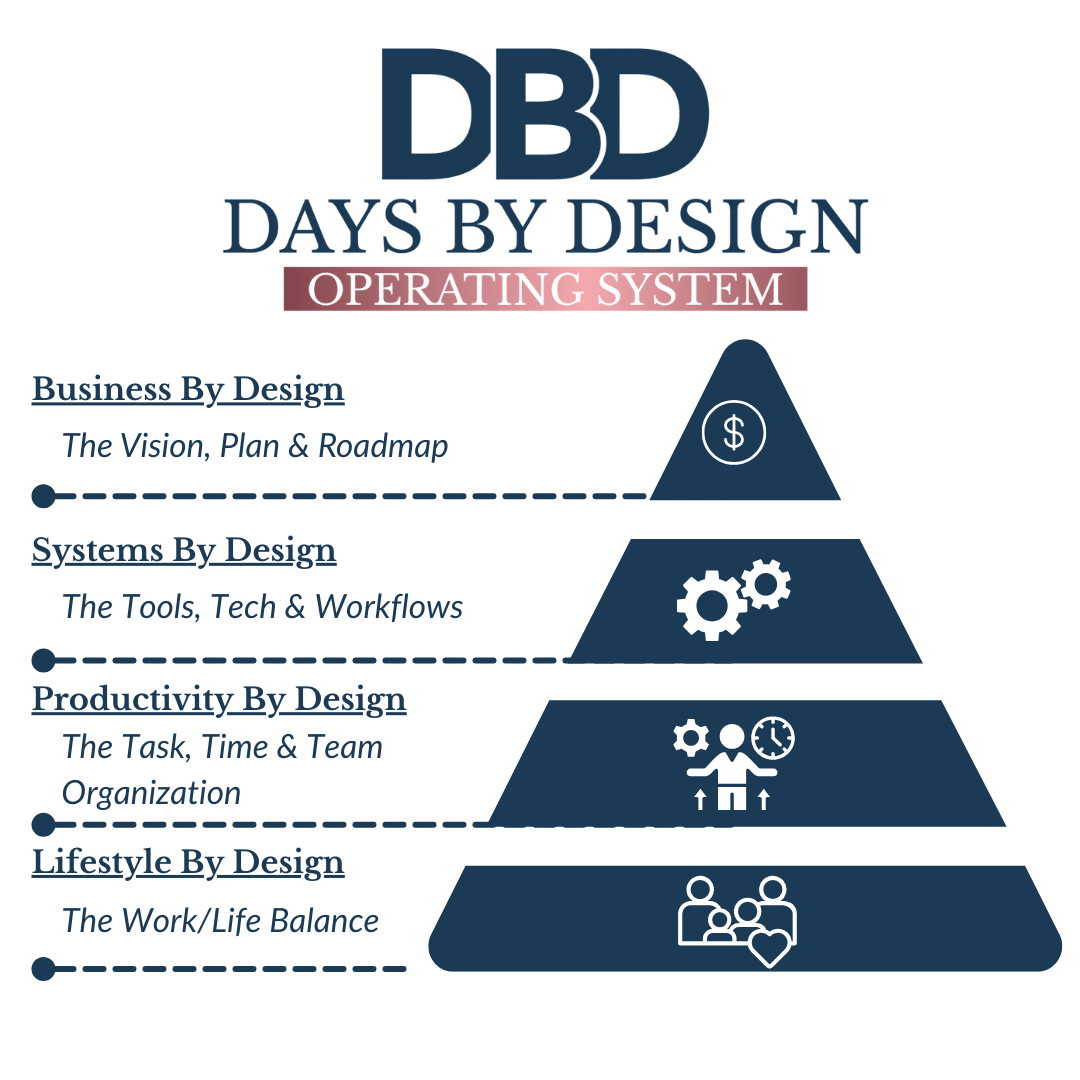
The Days By Design Operating System™ begins by looking at the environment surrounding the work itself and asking where unnecessary friction is being created.
Start by mapping where information lives.
List every place your company currently stores information. Include email, shared drives, project management software, cloud storage, notes, spreadsheets, individual computers, and anything else employees regularly use.
You may discover that the same type of information exists in three or four different places. That creates confusion about which version is correct and forces employees to rely on memory or ask someone else.
Every important category of information should have a predictable home.
Then clarify the purpose of every tool.
Technology becomes operationally expensive when people don’t know what each platform is supposed to accomplish. If one system manages tasks, another contains project information, another contains client communication, and a spreadsheet is secretly being used to track deadlines, employees have to remember the rules instead of simply following them.
You don’t necessarily need more technology. You need clearer technology architecture.
Next, redesign the founder’s calendar.
A calendar should not simply show when you’re available. It should protect the different types of work required from you as the leader.
Strategic thinking, decision-making, client work, team leadership, administrative work, and meetings all consume different kinds of attention. When every available space gets filled with meetings and reactive work, the company eventually loses access to the founder’s highest-value thinking.
Your calendar is an operational resource.
Treat it that way.
Finally, create maintenance routines.
Even a well-designed environment will deteriorate if nobody maintains it. Build simple recurring routines for reviewing your calendar, clearing unnecessary information, organizing files, reviewing priorities, and resetting the workspace.
The objective isn’t perfection.
It is predictability.
The most valuable question to ask throughout this process is simple:
Could someone competent find what they need without asking the founder?
If the answer is consistently no, the problem isn’t just organization.
You’ve created a business that relies on the founder’s memory to function.
That may work when the company is small.
It becomes a serious constraint when you’re trying to scale.
The purpose of the Days By Design Operating System™ is to replace that dependency with intentional systems that make information, responsibilities, and decisions easier to navigate.
Your workspace isn’t just where you work.
It influences how the entire company works.
Book a call or send me a DM to learn more.